Topic 2: Written Communication & Business Correspondence
Lesson 2: Channels and Internal Written Documents
Written communication flows through various channels, each suited to specific purposes within the organizational structure.
Main Forms of Internal Written Communication:
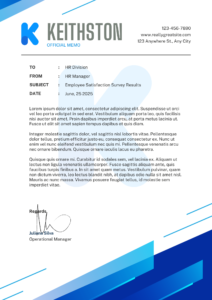
- Memorandum (Memo):
- Purpose: For internal communication between executives, subordinates, or peers. Used for reminders, requests, policy changes, and simple directives.
- Format: Includes “From,” “To,” “Date,” “Subject,” and the message. No salutation or complimentary close.
- Key Point: Never sent outside the organization. Not suitable for complex or serious matters.
Pic 1: Memo Sample
- Office Forms:
- Purpose: Standardized documents (e.g., application forms, invoices) to collect uniform data efficiently.
- Types: Complete forms, Fill-in forms, Guide forms, Paragraph forms.
- Design Principles: Should be functional, clear, logically sequenced, with sufficient space and clear instructions.
- Circulars and Newsletters:
- Circulars: Used to announce the same information to a large internal or external audience (e.g., new policy, meeting invite).
- Newsletters/House Journals: Periodic internal publications to inform, educate, and entertain employees, fostering organizational culture and goodwill.
- Notices and Suggestion Schemes:
- Notices: Brief messages displayed on boards for mass internal communication.
- Suggestion Schemes: Formal systems to promote upward communication, allowing employees to submit ideas for improvement, often with rewards.
External Written Communication Channels:
- Business Letters: The most common formal external document. Types include inquiries, orders, claims, sales letters, and appointment letters.
- Reports and Proposals: Detailed documents for analysis, recommendation, and formal requests.
- Press Releases/Handouts: Official statements sent to media outlets to publicize news and manage the organization’s public image.